The Higgs Field & And The Strings On A Guitar: What Is The Higgs Field & How Does It Relate To MusicThe universe is more musical than you think
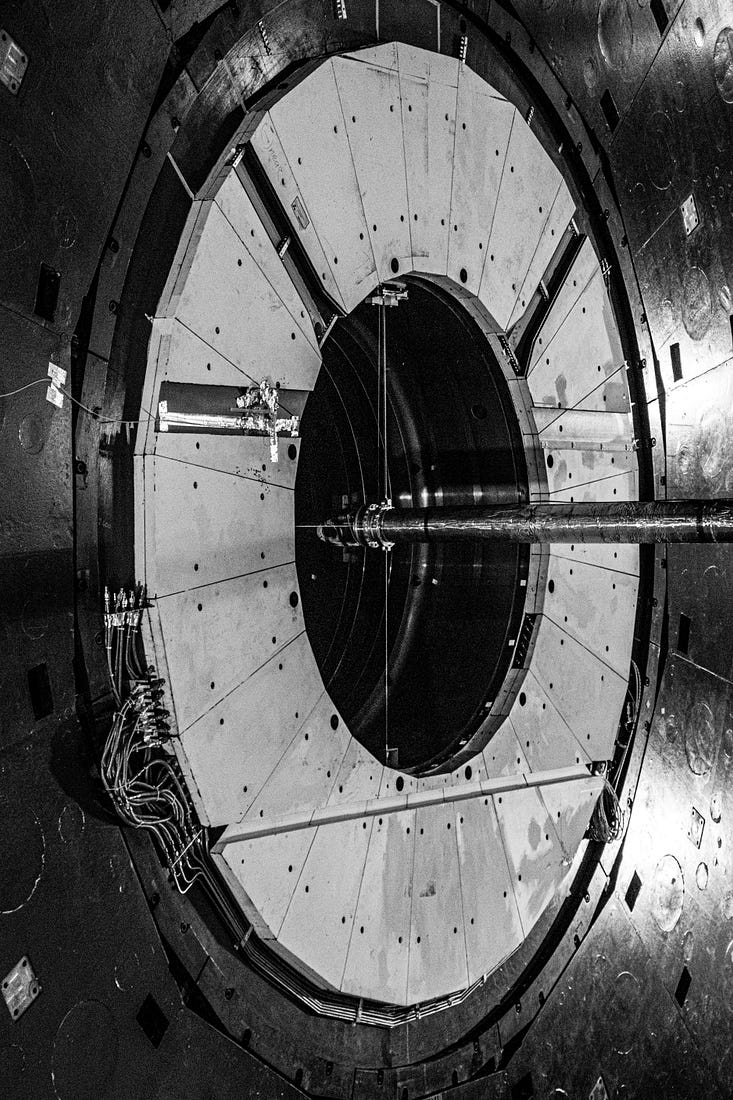 You’re sitting against the backdrop of a glorious view, the sky & sea to behold & at the beachfront cafe you’re sitting at, the guitarist in the band on stage begins to pluck at the strings on his guitar. These little ripples make their way to your ear as sound waves, and you groove to the smooth, sombre sounds as you sip your iced coffee. The music moves through the air & your brain interprets them giving them meaning & substance. The grand expanse of the cosmos is more musical than you’d think. We’ve come full circle to see just how starkly similar some of the laws of the universe are to the laws of music & sound — a field, a wave, & their interaction. There’s an uncanny resemblance to the Higgs field & playing a musical instrument like the guitar. It may seem rather farfetched at first to correlate a particle in the standard model, i.e. the Higgs boson & its field, to an instrument, but the way the Higgs field operates is rather similar to playing a string on the guitar — it’s all about vibration. The Higgs field is like other fields we commonly know of, like the electromagnetic field & the gravitational field. The Higgs field is something similar, and it permeates through space. The Higgs field gives elementary particles their mass because particles by themselves have no mass, but when they interact with a field, they begin to develop mass. A simple analogy describing the Higgs field as written in Quanta Magazine states: There’s this substance, like a soup, that fills the universe; that’s the Higgs field. As particles move through it, the soup slows them down, and that’s how particles get mass.
The discovery of the Higgs boson in 2012 at the Hadron Collider in Switzerland spooked the world & the physics community at large. Mercurial British alternative rock band Radiohead even released a song about it titled ‘Supercollider’.  But just like Thom Yorke & Jonny Greenwood’s guitars, when you play a string on the guitar, it vibrates in the same tone, which can be described as its resonant frequency. Similarly, each particle in a field vibrates at a frequency known as its resonant frequency in its particular field. In essence, the Higgs field stiffens up other fields, and as a result, it gives elementary particles their resonant frequencies & in turn, their mass. Quanta describe it as follows:
It’s all about interacting fields & particles vibrating within those fields that give rise to their mass. The gravitational field affects a pendulum by stiffening it up so that it can be at equilibrium, giving it a nonzero resonant frequency and giving rise to what’s known as a ‘restoring effect’ that brings it back to equilibrium after it’s displaced. If there was no gravity, the pendulum would just be floating through space & wouldn’t vibrate. Similarly, the Higgs field exerts a similar stiffening effect on particles, making them vibrate at their resonant frequencies & subsequently producing their mass. If there was no Higgs field, particles wouldn’t vibrate or have mass. Quantum field theory, which is the intersection between quantum physics and Einstein’s theory of relativity, points to this particular critical relationship between a resonant frequency and the mass of an elementary particle i.e. the more rapidly a stationary particle vibrates, the greater its mass. In the pendulum example, the ‘restoring effect’ of the gravitational field can be thought of as a stiffening agent, i.e. it stiffens the pendulum and brings it back to rest after it is moved. So essentially, the stronger the gravitational field, the more powerful the restoring effect, and the higher the pendulum’s resonant frequency. Just like gravity, the Higgs field creates a ‘restoring effect’ on other elementary fields in space and affects the way they vibrate. The restoring effect allows a field to have stationary ripples, i.e. the standing waves that are similar to those of when a guitar string is plucked. As Matt Strassler writes for Quanta Magazine:
In a lovely little analogy, Matt Strassler for Quanta ends his piece with a story explaining the Higgs field and its musical nature: “Once upon a time, there came into being a universe. Searingly hot, it swarmed with elementary particles. Among its fields was a Higgs field, initially switched off. But as the universe expanded and cooled, the Higgs field suddenly switched on, developing a nonzero strength. When this happened, many fields became stiff, and as a result, their particles acquired resonant frequencies and mass. That’s how the universe was transformed, through the influence of the Higgs field, into the quantum musical instrument it is today.” If you liked this article, you can buy my book Make Your Own Waves, which comprises 45 thought-provoking perspectives on life, which you can buy at the link: https://amzn.eu/d/dZaX8Dr If you’re in India, you can buy it here: https://amzn.in/d/fA4iDgb
Thank you for being a valuable subscriber to my newsletter Light Years! If you liked this post & found it informative, feel free to share this publication with your network by clicking the button below… I hope you found this post informative & it helped you in some way. As always, feel free to subscribe to my publication Light Years & support it & also share it if you’d like. Get it in your inbox by filling up the space below! You can find me on Medium on my Medium profile covering a plethora of topics (there’s a bit of difference between the posts here & there): https://medium.com/@gaurav_krishnan You're currently a free subscriber to Light Years by Gaurav Krishnan. For the full experience, upgrade your subscription.
|
Friday, 7 November 2025
The Higgs Field & And The Strings On A Guitar: What Is The Higgs Field & How Does It Relate To Music







Subscribe to:
Post Comments (Atom)
Yesterday’s Answered Prayers Become Today’s Confidence Fresh Manna by Pastor Tim Burt
Fresh Manna with Pastor Tim Burt ...


No comments:
Post a Comment