Sound Magnet Records presents our Origins Mixes & Interviews series, featuring mixes & stories from artists across divides, with music and themes inspired by their city of birth, current cities, or places they reside in, spanning artists and mixes from all over the world.
For mix no. #010 we have a mix by Madrid, Spain-based electronic artist TheQuasar.
TheQuasar is the moniker of Daniel Lopez. TheQuasar creates ambient and experimental music shaped by memory, atmosphere, and imperfect repetition. Exploring the spaces between place, emotion, and time through evolving textures and layered sound.
Listen to TheQuasar’s “Origins” mix on Soundcloud:
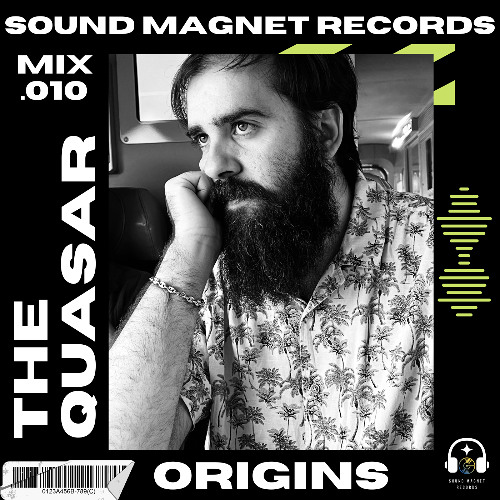 |
Sound Magnet Records. Origins 010 // The Quasar by Sound Magnet Records Sound Magnet Records |
Listen to The Quasar’s “Origins” mix on YouTube:
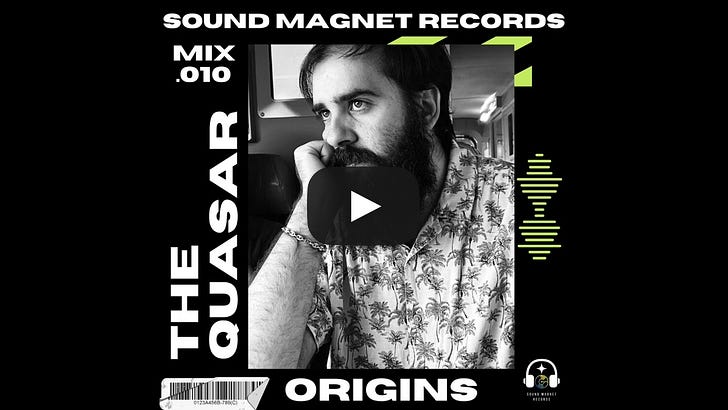
The Quasar is the moniker of Daniel Lopez. The Quasar creates ambient and experimental music shaped by memory, atmosphere, and imperfect repetition. Exploring the spaces between place, emotion, and time through evolving textures and layered sound.
Hi Daniel! It’s a privilege to have you on our Origins series. Let’s get started with the questions!
Where do you consider “home,” and how does that place live in & shape your sound?
“Many of the places that end up finding their way into my music aren’t necessarily big destinations or particularly famous locations. In fact, they’re usually much more personal and specific than that.”
“I’ve always been drawn to places that somehow stay with you. A road lined with trees. A viewpoint. A route you take regularly. A random detour. Even a roundabout you’ve driven through hundreds of times and somehow started associating with different stages of your life.”
“Quite often, it’s not even the place itself that inspires me. It’s the journey. The route between point A and point B. There’s something about those moments of transition that I’ve always found interesting.”
“I think all of that eventually finds its way into the music. Not because I’m trying to describe a specific location, but because I’m trying to preserve the feelings attached to it. The memories, the emotions, the people who were there, the conversations, or simply how I felt that day.”
“Over time I’ve realised that many of those places probably mean nothing to anyone else, yet they end up carrying a lot of weight inside my songs. And I suppose that’s part of what makes them special.”
Which artists/music scenes/mentors/records shaped your ear early on?
“There have been many, honestly, and I think they’ve all left something behind.”
“I started with rock music, listening to it constantly and playing bass. I spent a lot of time trying to understand what it was about those songs that connected with me, and without realising it I was already learning things that I still use today.”
“Later came jazz and a period of fairly intense musical discovery. If I had to mention a couple of artists who have stayed with me over the years, Herbie Hancock and Marcus Miller would definitely be among them.”
“Then I went through a different phase. Instead of constantly searching for new music, I became slightly obsessed with understanding how music was actually made. Production, recording, mixing, synthesis... I spent a lot of time trying to figure out what on earth was happening behind the speakers.”
“Electronic music arrived later, with Synthwave acting as a bridge between different worlds. From there everything opened up. Ambient, experimental music, synthesizers, textures, hardware... the more I explored, the more I realised how much there was still left to discover.”
“These days I continue to find a lot of inspiration in independent artists. I enjoy discovering smaller projects, following their evolution and seeing how different people find their own creative voice. Being able to connect directly with the people behind the music also adds something special.”
“Looking back, I don’t really see these as separate chapters. They’re more like different roads that eventually ended up meeting somewhere along the way.”
What’s a turning-point city, or place (or gig or year) that shifted your musical direction?
“One of the biggest turning points came when I decided to go deeper into my musical education and move beyond learning everything entirely on my own.”
“A large part of that process happened in Madrid. It was there that I discovered new tools, new ways of working and a lot of possibilities I didn’t even know existed before. It was a period that made me realise how many layers there are to music.”
“At the same time, a small town in the Western mountains of Madrid is where I’ve developed many of my own ideas, and where I consider home to be.”
“If I had to summarise it, I’d say Madrid showed me possibilities, while the mountains gave me the space to experiment with them.”
“The truth is, I still feel like there’s an endless amount left to explore. Every time I think I’ve figured something out, a new idea, a new tool or a different way of approaching things comes along and opens another door. Thankfully.”
About the mix, describe a track or track(s) in the mix that feels close to your origin story. Why that or those ones?
“This mix has been difficult to explain from the very beginning, which was probably a sign that I was heading in the right direction.”
“The main idea was to play with the perception of time. I wanted everything to feel slower than usual, as if things were slightly frozen, but still moving forward.”
“At first, everything feels a little displaced. The rhythms don’t quite land where you expect them to, some parts feel stretched beyond what seems reasonable, and there’s a constant feeling that something isn’t entirely working. But gradually the pieces begin to settle into place and your ears adapt. What initially feels strange eventually starts to make sense.”
“I think that has a lot to do with how memories work. When they come back to us, they rarely arrive in a neat and organised way.”
“The piece was created specifically for this project. I started inside the DAW with long pads, sparse percussion and a moving arpeggio. Then I did what I usually do and started making things unnecessarily complicated.”
“I ran everything through a Yamaha MT8X, lowered the pitch significantly, recorded it to tape and then brought it back into the computer to keep manipulating it. After that came the stretching, the resampling and a few decisions that, if I’m honest, had me wondering whether I was improving the piece or simply taking it somewhere very strange.”
“Thankfully, I kept going.”
“The final result connects closely with themes that appear again and again in my music: places, memories, the passing of time and the way experiences reorganise themselves over the years. Sometimes things don’t make sense immediately, but if you give them enough time, they eventually find their place.”
Talking about gear & producing process, what are your go-to instruments, hardware and/or VSTs & how has your process evolved from your first releases to now?
“These days, most of my music revolves around a handful of instruments that I know quite well.”
“The Arturia MiniFreak and the Poly D are usually the starting point for many ideas. The MiniFreak is incredibly flexible and constantly surprises me with something unexpected. The Poly D brings a warmth and character that fits naturally into the kind of music I make.”
“For effects, I regularly use a Zoom MS-70CDR, a Chase Bliss Mood MKII (Desert Edition), a Strymon El Capistan and a Strymon Deco. Each one contributes something different. Some create atmosphere, others create movement, and some seem determined to make everything a little stranger than it was five minutes earlier.”
“The Yamaha MT8X holds a special place in my process. Sometimes I use it purely for the character of its circuitry, while other times I record directly to cassette and then resample the results. I really enjoy what happens when you introduce a small amount of unpredictability into the process.”
“I also play bass and guitar, and two of my favourite instruments were built by a luthier. Beyond how they sound, there’s a personal connection to them that inevitably finds its way into the recordings.”
“As for evolution, I started with a Scarlett 2i2, a Behringer C-2 microphone, a laptop and a lot of enthusiasm. Knowing exactly what I was doing came a bit later.”
“Like many musicians, I’ve bought things I needed, things I didn’t need, and a few things I was absolutely convinced I needed until they arrived.”
“Over time I’ve become less interested in constantly expanding the studio and more interested in exploring the tools I already have. Some of my favourite sounds have come from mistakes, accidents or moments when I wasn’t entirely sure what I was doing.”
“Hopefully that never changes.”
What’s inspiring you right now in music & outside music?
“The older I get, the harder it becomes to separate inspiration from everyday life.”
“A lot of what ends up in my music comes from experiences, routines, travels, conversations, memories and specific places. Sometimes inspiration appears while visiting somewhere completely new. Other times it appears while taking the same route you’ve taken a hundred times and suddenly noticing something that has always been there.”
“I’m also very interested in imperfection. Memories are imperfect. Experiences are imperfect. People are imperfect. I suppose that’s one of the reasons I’m drawn to sounds that contain a bit of wear, instability or unpredictability.”
“One of the things I love most about ambient music is that almost anything can become a source of inspiration. A landscape, a photograph, a field recording or even a mistake while trying to do something completely different. Some of my favourite ideas have started with, “Well... that definitely wasn’t the plan.”
“I’ve also become increasingly interested in the visual side of creativity. Sharing places, filming short videos, documenting journeys and connecting with people through those experiences has become an important part of the process.”
“In the end, it all feels connected.”
What’s next for you in 2026 & the coming years?
“At the moment I’m working on my next release, which is gradually taking shape as an EP. I don’t know exactly how many tracks will end up on it yet, but the overall direction feels quite clear. Well... as clear as these things ever are when you’re making ambient music.”
“The goal is to release it before the end of the year, hopefully around November. I’m trying to make it a more focused and ambitious project while still keeping plenty of room for experimentation, which is one of the things I enjoy most.”
“Alongside that, I’ve recently started a series called Ambient Postcards. The idea is to create small audiovisual pieces inspired by specific places. In many ways it connects directly to themes that keep reappearing in my work: memory, place, atmosphere and the relationship we develop with certain locations over time.”
“Beyond that, there are quite a few ideas floating around. Some already have a shape, while others are still sitting in folders waiting for me to figure out what they want to be when they grow up.”
“One of the things I enjoy most about making music is not knowing exactly where those ideas will lead.”
“And if all goes well, I hope there are still plenty of places, sounds, stories and a few unexpected detours left to explore.”
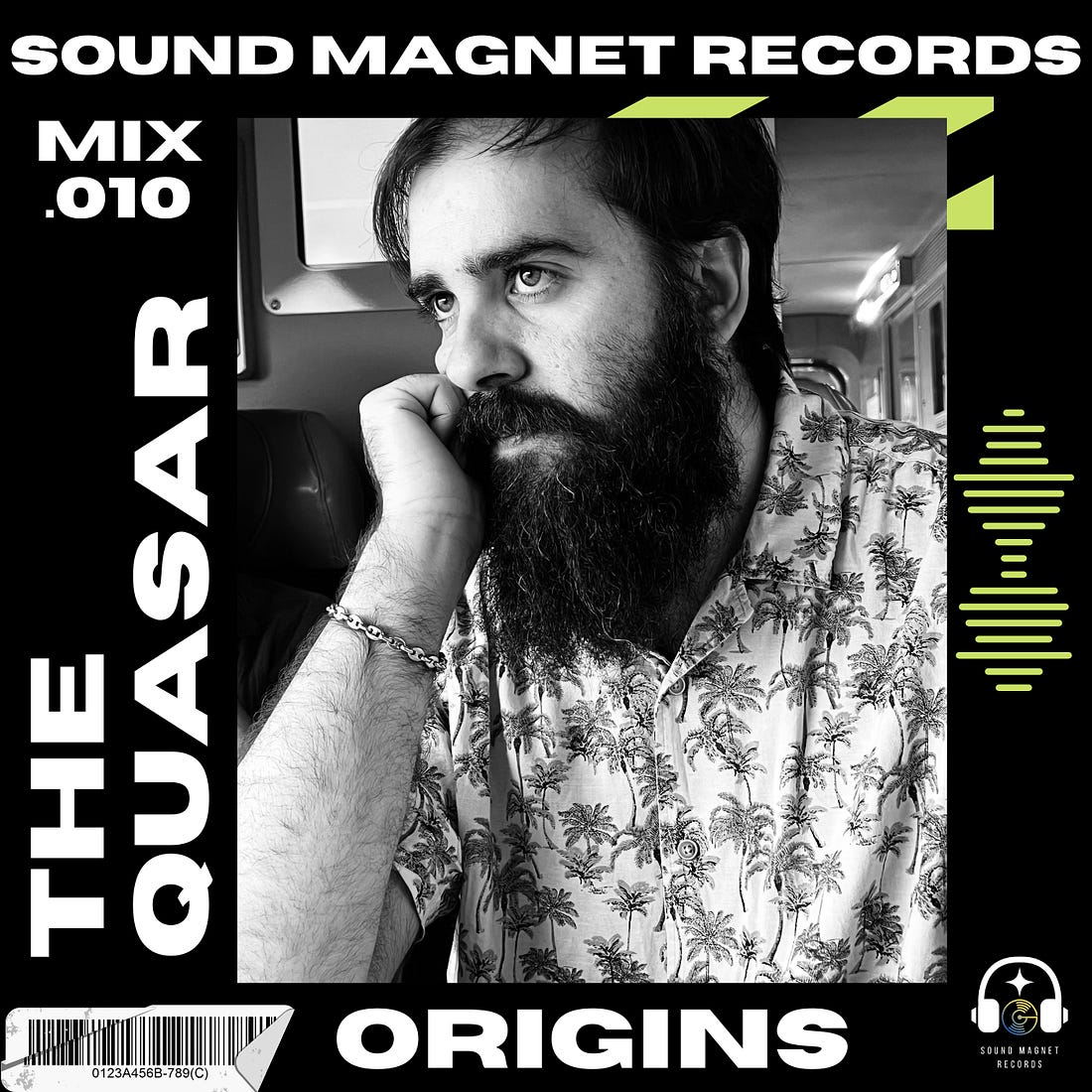
ICYMI, here’s TheQuasar’s Origins mix (again):
|
|
Sound Magnet Records. Origins 010 // The Quasar by Sound Magnet Records Sound Magnet Records |
Follow Sound Magnet Records:
Sound Magnet Records Instagram: https://www.instagram.com/soundmagnetrecords/
Follow The Quasar:
Spotify:
 |
TheQuasar Artist |
Instagram:
https://www.instagram.com/thequasar__
Bandcamp:
https://thequasar.bandcamp.com/
Tracklist:
TheQuasar — [Track Name: Meridianaut]
If you like this post & the music, feel free to share it with your network by clicking the button below…
Share Sound Magnet Records
If you enjoy the interviews & mixes, consider subscribing to the Sound Magnet Records newsletter!






No comments:
Post a Comment