
8 Essential Philosophies of Jean-Paul Sartre & His ExistentialismA deep dive into the existentialist ideas of one of the 20th century’s most radical & liberating thinkers & why they matter more than ever
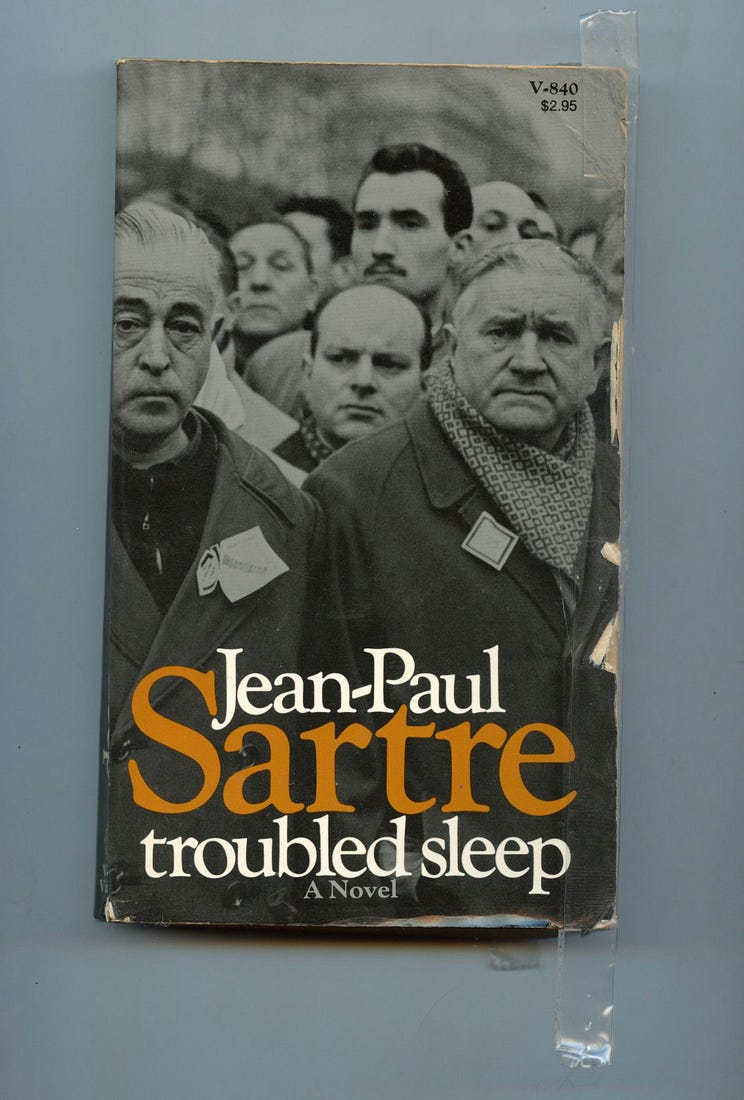
“Man is nothing else but what he makes of himself.” — Jean-Paul Sartre Studying & reading philosophy is my way of dealing with the human condition and understanding it better. Because life is absolutely a strange predicament. I’m not intellectualising, and I dare not call myself an “intellectual” because of how little I know and understand about various topics and of life itself, but I try & you could say I do enjoy an intellectually stimulating conversation. I wrote a take about this in my first poetry book, The Indian Night, which was based on a conversation I had up in Himachal Pradesh against the backdrop of the Himalayas while I was drinking and talking with some random strangers. I wrote a brief poem about that conversation, adding some fictional flavour, where the protagonist of the conversation tells the other person, when asked about life: “I think it’s a mistake and we can do as we please”. Unknowingly, it was a brief flirtation with my own philosophy back in my twenties, blurring into something akin to what I’ve read about Albert Camus and his philosophy of ‘The Absurd’. I did enough digging on Camus to base a chapter of my non-fiction book Make Your Own Waves on his philosophy of “absurdism” and his call to arms to rebel and act defiantly against the meaninglessness of the void. And after Camus surely comes his contemporary Sartre, who I’m just starting to understand and uncanilly take a liking to. However, Sartre and Camus didn’t see eye to eye in what was a public fallout from arguably French philosophy’s biggest proponents. Sartre is one of those philosophers who I kept circling around for a long time before actually sitting down, thinking, and really engaging with his ideas. His name would come up in conversations, in books, in films, and yet it always felt like his philosophy was sitting behind some kind of barrier that I just hadn’t hit or begun digging into. Once you do get in, though, it hits differently. Jean-Paul Sartre (1905–1980) was a French philosopher, playwright, novelist, and political activist and one of the central figures of 20th-century existentialism. He’s the man behind works like Being and Nothingness, Nausea, No Exit, and Existentialism is a Humanism. He was famously awarded the 1964 Nobel Prize in Literature and, in true Sartrean fashion, refused it, saying a writer should never allow himself to become an institution. That refusal to accept a Nobel Prize, in many ways, tells you everything about the man and his philosophy. So, let’s get into the 8 essential philosophies Sartre left us with. 1. Dare to ActSartre’s existentialism is built on one central and foundational idea: that we are born without essence. Blurring into Camusian philosophy, like Camus, Sartre also suggests that life has no inherent meaning other than what we make of it. However, he takes the mechanics a step further. According to Sartre, unlike a chair or a rock, which simply are what they are, human beings have what Sartre calls the “power of subjectivity.” We are not defined objects. We define ourselves through our actions. If you’ve been feeling stuck or like you’re not going anywhere, Sartre would say it’s because you’re treating yourself like an “object-in-itself” rather than an “object-for-itself”. It’s key to understand this first, and the next step is to “act”. By “action”, he argued, we become an “object-for-itself” and unique and free human beings. Most people just live reactively, acting only when necessary or when the situation calls for it, but Sartre argues that you should take action without it being asked, and it is through constant action that we really engage with the world. So stop waiting to be told what to do. Take the initiative & dare to act. 2. Face Your Freedom“Freedom is what you do with what’s been done to you,” writes Sartre. This is one of Sartre’s most striking lines, and it hit me pretty hard. No matter what your circumstances or predicament is, you are still free to act given those conditions or parameters. Even if it’s the most dire of circumstances, you still have the freedom to choose how you act. Life can be hard, and we all have our share of ill fortune and pain, but even in the most constrained circumstances, you are still free to choose how you respond, how you think, how you carry yourself. Refusing to acknowledge that freedom is what Sartre famously calls living in “bad faith”. 3. Take ResponsibilityBuilding on the last point, if you are always free to choose, then every single choice you’ve ever made is yours. You need to “take responsibility for your freedom”. You can’t go on blaming your upbringing, your financial status, your boss, your circumstances, or fate. Sartre is blunt, brutally honest and unrelenting here because he suggests that total freedom comes with total responsibility. He further suggests that every action you take expresses your values. When we do something aligning with our values, we feel good about ourselves, but when we act against our values, we make excuses or throw blame around. The moment you start making excuses is the moment you slip back into bad faith, suggests Sartre. Own your freedom with responsibility and, in turn, own your life. 4. Set an ExampleThis one genuinely surprised me. Sartre believed that when you choose for yourself, you’re also choosing for all of humanity. This might seem radical at first, but if you delve into it a little, it alters how you act and make decisions. Your actions send a message about what you think is acceptable, desirable, or worth doing. So the question he asks us is “What if everybody did that?” If you ask yourself that question, every small moral shortcut or action or behaviour becomes entirely different. Your personal calls and how you act, in a way, turn into something that exemplifies the kind of world you want to live in. 5. Embrace Your FearsThe Indian philosopher Jiddu Krishnamurti went into the human & bodily coping mechanisms of fear & how to battle it through awareness. But Sartre reflects more on how to embrace and act when there’s an element of fear involved. He called this “anguish”, which is the very natural, very human feeling of dread that comes with realising just how free you are. The person who wants to quit their job and start a business but never does, or the artist who never shares their work and gives it up for a regular job, or the person who wants to migrate to a different place, but doesn’t because of circumstance or dread or simply fear of the unknown. Sartre’s message is to act despite fear. Fear, Sartre argues, is a condition of freedom. Acting despite fear means you are facing your freedom head on, and as other books and articles suggest, the fear of the unknown is where growth lies and is an indicator that you’re on your own path of growth. It should daunt or scare you; that’s what makes it worthwhile. It means you’re alive and at the wheel and in the driving seat of your own life. 6. Don’t Let Others Define You“Hell is other people.” is one of the most quoted but most misunderstood lines in philosophy. I can go on about this for a bit. But what Sartre meant was that other people reduce you to what they see. People don’t want to applaud someone who is doing things differently or achieving more than them. It’s buried deep in societal psychology. They see what they want to see of you: the clerk working extra hours to pay the bills, the single mother divorcee spoken about at social gatherings, the artist who is struggling, the failure at something, the ordinary friend. Their gaze tries to fix your essence, and it can be daunting in this age of social media with constant outward glare. But Sartre argues that you are an object-for-itself and society’s labels of you are not your limits. You are always more than what anyone else sees, and it’s up to you to recognise that & forge your own path, even if it goes against the grain. 7. Don’t Follow a DoctrineSartre tells the story of a student torn between joining the French Resistance or staying home to care for his grief-stricken mother. Every doctrine, every moral framework, gave him a different answer. Sartre’s response is ‘choice’. It’s your choice to make. No religion, ideology, doctrine, theory, or rule can make your most difficult decisions for you. At some point, you have to trust your gut or just yourself and own it. Far from being relativism, it’s the most honest form of freedom. 8. Embrace Your Nothingness“Nothingness lies coiled in the heart of being,” said Sartre. Along with Camus, this is a liberating idea Sartre puts forward. Our lack of a fixed essence or the lack of meaning in the void isn’t a travesty or a problem, but it’s our greatest asset. Stop clinging to what you are and start seeing everything you could be and all the possibilities of taking action. The waiter who only sees himself as a waiter has already closed a thousand doors. You are free and totally responsible for grappling with nothingness and the meaninglessness of it all. So recognise the blank canvas that arrives every new day, and then pick up the brush and paint your life story. Sartre isn’t the easiest philosopher to digest, but he might be one of the most blunt and honest ones. In a world that’s constantly trying to hand you an identity, whether it’s through social media, job and career titles, peer expectations, societal norms and so on, his philosophy is a sharp and essential reminder that you are not a fixed thing. You are another part of the wheel of human life, grappling with the human condition like those before and those who will come, and he provides a framework to tackle it head-on, in a more thoughtful way than the more maverick rebellion of Camus. Sartre’s entire philosophy centres around the brutal fact that “you are your freedom” and “you are responsible for your freedom”. And everything you do with that freedom is entirely up to you. You can delve more into Sartre’s philosophy via the YouTube video below 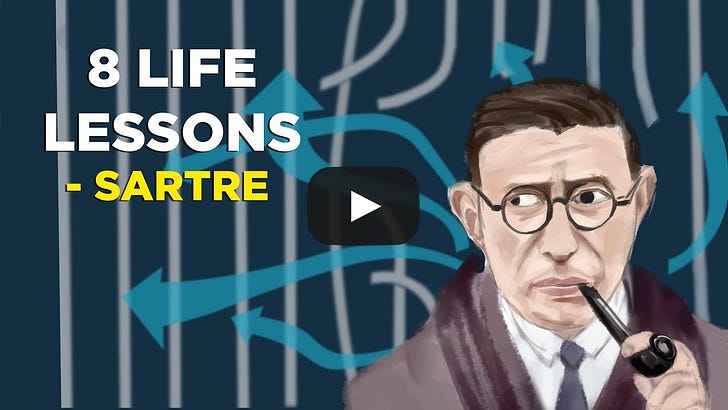
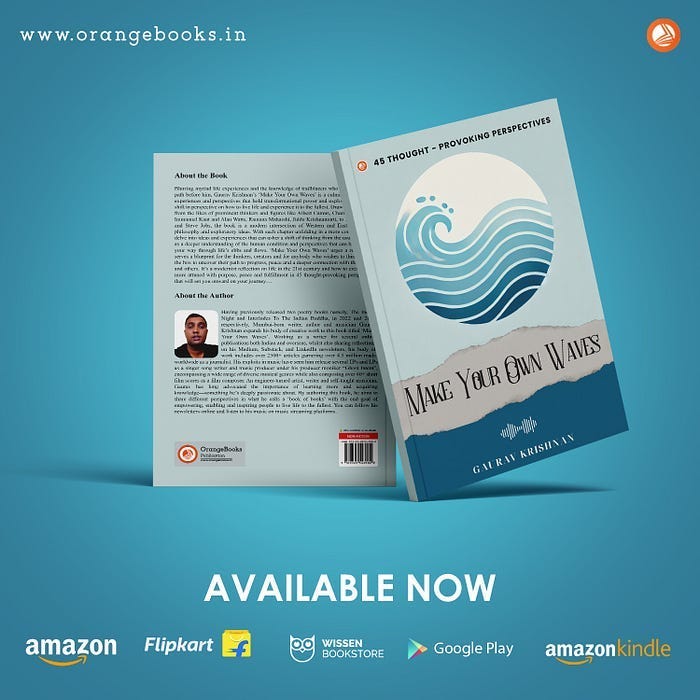
If you liked this article & it helped you in some way, you can buy my book Make Your Own Waves, which comprises 45 thought-provoking perspectives on life, which you can buy at the link: https://amzn.eu/d/dZaX8Dr If you’re in the US, you can buy it on Barnes & Noble: https://www.barnesandnoble.com/w/make-your-own-waves-gaurav-krishnan-krishnan/1147724812 If you’re in India, you can buy it here: https://amzn.in/d/fA4iDgb
Thank you for being a valuable subscriber to my newsletter Light Years! If you liked this post & found it informative, feel free to share this publication with your network by clicking the button below… I hope you found this post informative & it helped you in some way. As always, feel free to subscribe to my publication Light Years & support it & also share it if you’d like. Get it in your inbox by filling up the space below! You can find me on Medium on my Medium profile covering a plethora of topics (there’s a bit of difference between the posts here & there): https://medium.com/@gaurav_krishnan You're currently a free subscriber to Light Years by Gaurav Krishnan. For the full experience, upgrade your subscription.
|





No comments:
Post a Comment