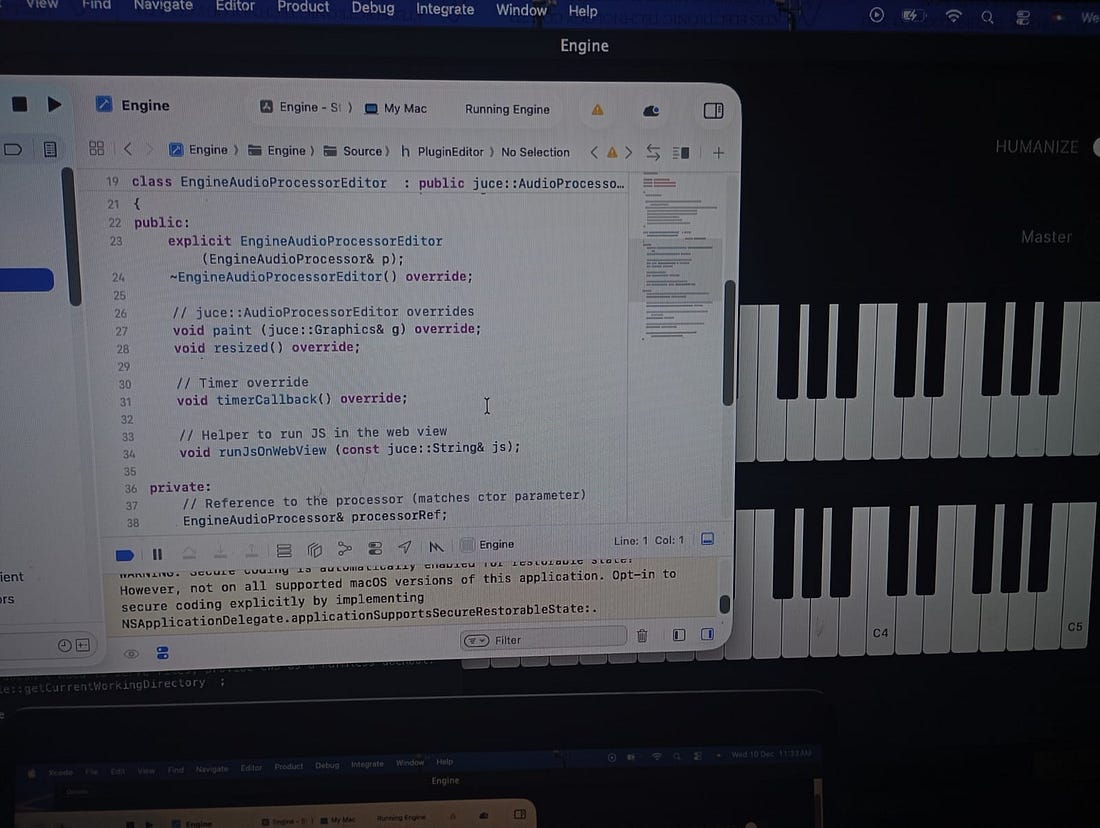
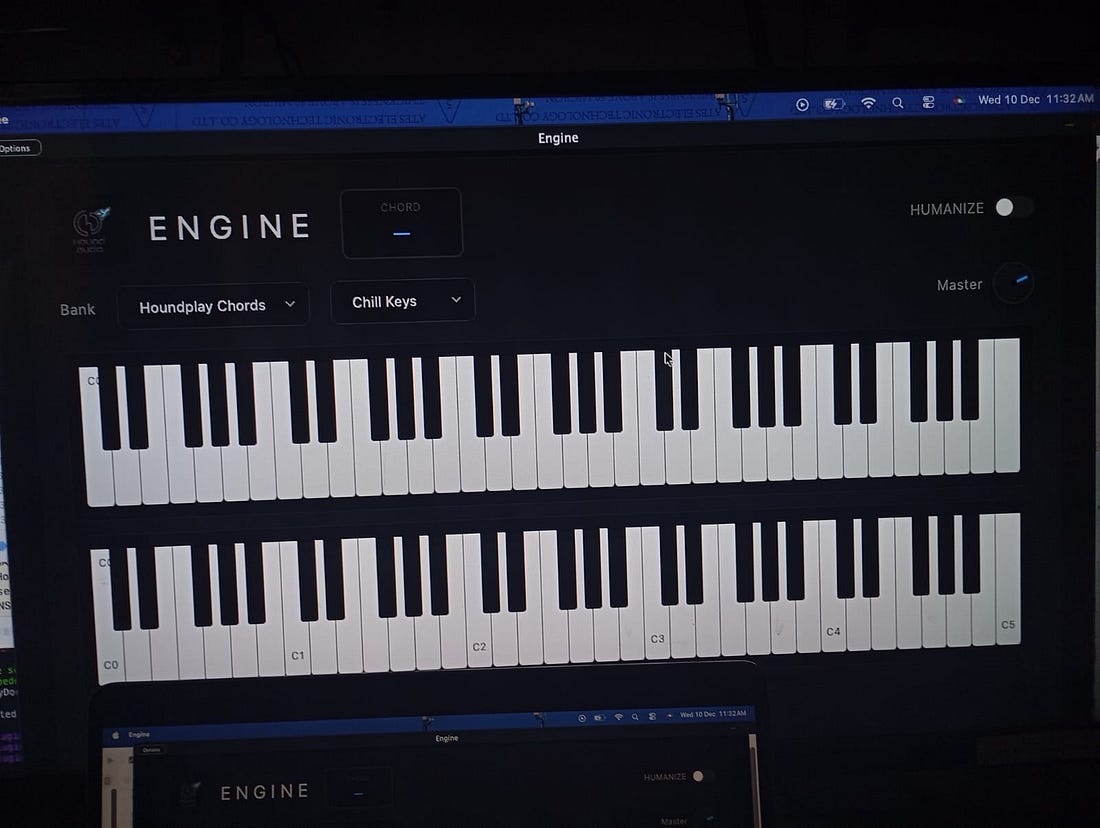
 Every year should be a learning experience. In fact, so should every day. You live, you do your thing, you learn & you grow. Life is meant to be lived out, of course, but when you learn, reflect, understand and apply, things get better, easier & that bit more infused with your personal touch. Throughout the fabled hallways of literature & philosophical works, it’s essentially every writer or philosopher grappling with the human condition & our response to the human condition with our own interpretations of how to live a fulfilled life; if that’s the goal. You can just drift through life and be happy, too. It’s totally subjective. It can be so relative and personal from person to person, because our experiences are all different, but I guess forging your own path based on your life & what works for you, is perhaps the best way to trudge forward past the ebbs & flows of life. With that in mind, here’s my top 10 learnings from the year 2025. These could strike a chord with you, or may not, but they’re based on my life & my journey, which maybe could blur into yours. Either way, it’s up to you to take what works & discard what doesn’t. 1. Work on Yourself, EndlesslyEssentially, that’s what it’s all about. Self-improvement, self-mastery, and the constant process and urge to get better step by step. The tools are there, the information is there too. The Stoics explored this in fascinating detail (you can Google “stoicism on self improvement”, I won’t get into the full details), but essentially it’s about focusing inward & becoming better each day. There’s no best version of yourself; there’ll be acceptable levels from time to time, but it’s just a process of endless work on yourself until you die. I tend to look at it like learning a musical instrument. Since I play the guitar, piano and bass, and a bit of the trumpet, I’m well aware of the sheer amount of time and practice it takes to get to even a certain level of acceptable skill. And that has taught me about myself and life as well. The key is to keep improving, slow & steady. Work on yourself as much as possible, sure, there’ll be off days & days when you can’t get things done & put in the practice & work. But that’s okay & it’s not the end, it’s picking up from wherever you left off, and to keep chipping away. You’ll see results step by step. And you’ll get to levels where you feel really great. But there’s always another level to reach. It’s almost endless, and that’s the beauty of it. You can never totally master yourself or any skill, but you can put in the work to keep getting to those acceptable levels and build from there. This year I progressed a bit on the guitar & piano & my new bass guitar, but not to the levels I would have liked to reach. But that doesn’t deter me. It’s an ongoing game, and I love to play. I also began to take my fitness a bit more seriously, since it was something I kept neglecting, giving myself the excuse that there wasn’t any time. So I started running in the mornings every day. And starting the mornings with runs just feels so good. It’s step by step. Like that old Aesop fable we were all read when we were little, ‘Slow & steady wins the race’. 2. There’s No Deadline To GoalsWhich brings me to my second major learning of the year. When it comes to goals, we tend to put timelines on everything. We think that it has to be done within that timeframe, or it won’t work. Everything is bracketed into deadlines, timeslots, targets within ‘x’ weeks, an ARR within ‘x’ number of months, etc. Corporate culture has put us all on that default setting. But that approach is deeply flawed. Unless, of course, you’re running a multi-employee business (for which it’s necessary for employees to work to the clock & timelines). But if it’s your own personal or professional goal, it causes an unnecessary rush to a self-imposed finish line. The thing with goals is, yes, they need to be done, but it’s okay if you do them slowly and at your own pace. You’ll get there in time; it’s a long game. Always. It’s always a long game. Remember that. Just like life, your goals are a long game as well. There’s no quick fix. So it’s better to keep working on them until they’re finished, however long that takes. The lesser time constraints we put on our goals, the lighter & more enjoyable they feel & you actually want to put in the time and effort because it’s slowly growing & you’re working on it as time permits. In this book I read this year by a Zen monk named Jikisai Minami called It’s Okay Not To Look For The Meaning of Life, he offers a counterintuitive take on life ambitions and goals, suggesting that it’s “okay” whether we achieve them or not. It’s a brutally honest take, and yes, it’s actually totally fine whether you achieve your goals & targets or don’t, as long as you live life on your terms along the way. He argues that there’s not much left at the end of a lifespan, and these goals are essentially immaterial at that stage. It might seem defeatist, to a certain degree, but it allows a much less stressful way of living life. But when you can work on your goals at your own pace, it opens a lot of possibilities & you can immerse yourself in that work by not compromising on other aspects of life. In essence, it’s not conforming your life to a goal but adapting your goal to your life. Of course, in some cases, what you’re building could become outdated in enough time(especially if it’s in tech). But that’s a strategic decision you need to take before you even begin. So choose something that’s endless & will always be needed. For me: This year, I began my explorations in starting an audio software company as a solopreneur. So essentially, it’s a one-person company where I build, test, market, scale and repeat. With AI, it’s become even easier to launch such an ambitious one-person venture. After a few months in, my first product, named “Engine”, is slowly coming into fruition. It’s taken some time (as I’ll elaborate in the next section), but its final deployment is on the horizon (whether that is, 2 or 4 months or more away). I won’t get into the details of what it does for brevity, but just wait for it.
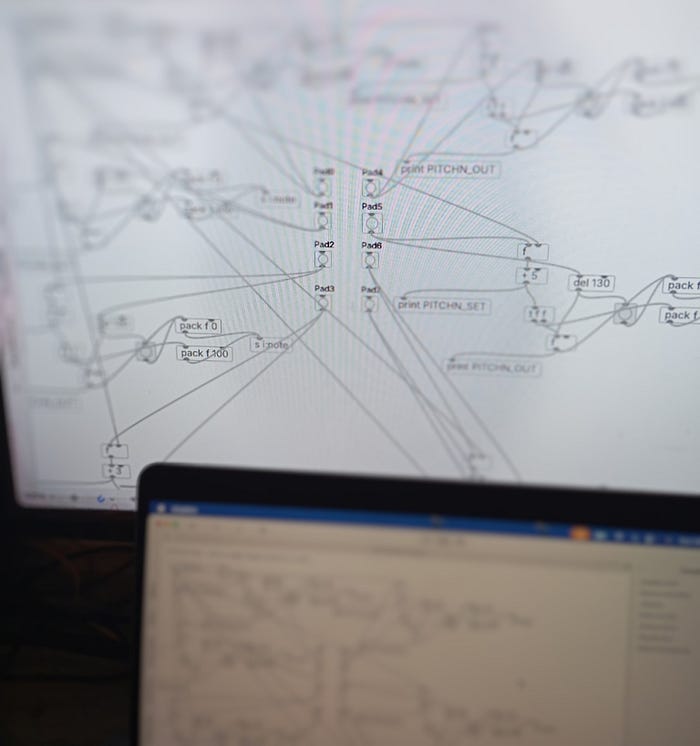
I also launched a record label called “Sound Magnet Records” using my years of experience at the intersection of online content & online journalism & music, to primarily showcase the underground music scene. The motto of my label is to be “a voice for the underground”. So essentially, I showcase obscure & underground artists from all over the world in a mix & interview series called “Origins”. It blends storytelling with music & I give otherwise unknown artists a chance to tell their story & share their music. I managed to hook one artist for our first month of the series, & December, being December, was mainly for outreach with the holidays, etc. So we have a steady pipeline of several artists contributing to the Origins series from January next year onwards. You can subscribe to the Sound Magnet Records Substack in the interview, linked below.  The aim is to grow this label into a space that showcases underground artists from all over the world & their stories & to build a community, slowly but surely. And then move on to more standard label activities. Again, everything takes time. I read this quote somewhere that said, “Before starting a venture, be sure you want to commit at least 10 years or more to it.” And just like any investment, this is a 10 to 15-year game or more. There is no definite timeline, and that’s okay. But coming back, the point is that your goals don’t need to be compartmentalised into time brackets. Let it grow, let it take its time. You can always evaluate it at a later stage. And all this is while balancing my job as a football journalist. So yes, your goals don’t need deadlines. They just need perseverance. 3. Don’t Be Afraid To Tear It Down & RestartComing to point number three. This happened as I was building my software ‘Engine’ & another product idea I had before that simultaneously. I was initially using this newer visual programming dev framework called Plugdata to develop them. Again, I was using the help of AI. But after a while, I realised that I was just taking way more time & going in circles with my prompts & answers and all the debugging in the visual format. This is because ChatGPT and Claude & Cursor aren’t well-versed with Plugdata because it’s a newer visual framework and IDE. I initially thought a visual programming framework would be easier to build for me, but I was wrong. This went on for a few months, and the whiteboard of the visual interface became almost a spiderweb of commands and connections that became cluttered, confusing & wasn’t really progressing.
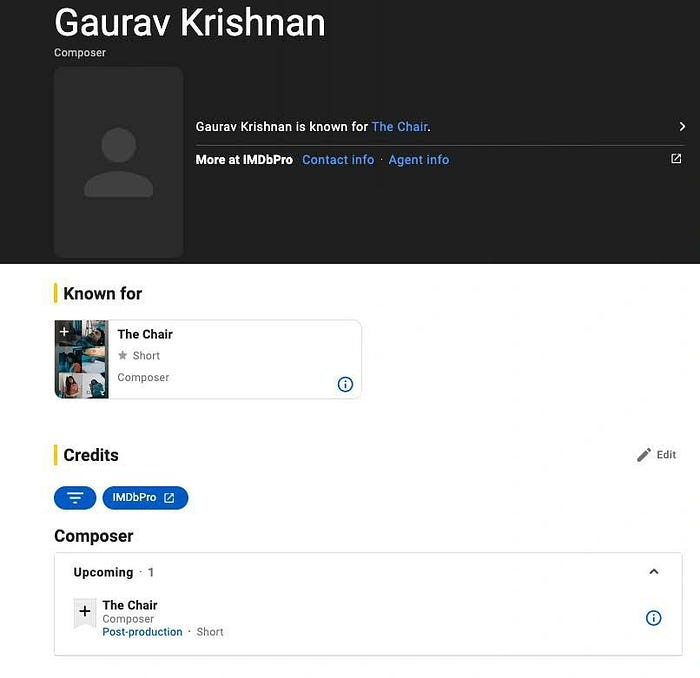
By this time, I had already spent 3 to 4 months on it, so as I stood there evaluating things after 3 and a half months one night while sipping coffee and slightly drained from all the back & forth with the AI agents & the IDE, I decided to pull the plug. It was a tough call. I had already spent so much time on it. But it wasn’t leading me to tangible results. Yes, goals take time. But you’ve also got to know when to pull the plug on something, or when an approach isn’t working. You need to evaluate & analyse with a clear head and weigh the pros and cons. Working with ChatGPT, Claude and Cursor on C++ was way easier because C++ is the mother of all programming languages and something the AI agents are well versed with, compared to this newer framework of Plugdata. So it was a decision that would save me months of time despite having to start the entire dev from scratch. Also, I’m actually a B.E. IT engineer by my undergraduate qualification, so revisiting C++ got my old textbook knowledge back a bit, despite being after over a decade or slightly more. So I weighed up the pros and cons, & eventually decided to go with C++ and the JUCE framework to build my software products & it was a pivotal and hugely rewarding decision. The point I’m getting to without the technicalities is that: You’ve got to know when to tear down and restart when something isn’t working. Hitting a brick wall happens often, not just in tech, but in any aspect of life. Sometimes, you just have to reevaluate, push back and tear that wall down and start from scratch again. It could take longer, but if it optimises your workflow and is a better decision in the long run despite what you’ve already built or created, if it needs a reset, it’s usually worth it. So yes, don’t be afraid to tear it down & restart. Whatever it may be. 4. Tune InIsn’t it funny how certain things only happen at certain times? Call it kismet (kismat in Hindi), fate, the universe or whatever you’d like to call it, there’s a certain flow to life. An idea for something pops into your head at a certain time. Like, for example, this idea for this article sprang up in my head only this month as I was searching for topics to write about to end the year. Or other certain ideas for articles came at their particular time. There wasn’t any calendar, there wasn’t any system; they just sprang up out of the blue at that particular time. Not six months before, not six months later. They come just when it’s right. I’d been reading, or rather listening to, Rick Rubin’s book The Creative Act: A Way of Being, and he talks about this. He calls it the natural flow of consciousness and that we must ‘tune in’ to it. “If you’re a creative person, you’d know what I’m talking about. Creative ideas come at their particular time. They can come at any time, any place or anywhere from any source of inspiration or just at random. We have to just be attuned to it. There’s a certain rhythm and flow to our ideas and, in response, our acting on those ideas. “I don’t know if you’ve felt it, but you’ve perhaps experienced it, in that certain ideas come to you at a particular time in life. Whether you act on them immediately or after some time, they come at certain stages of our lives, or our weeks & days.” “Whether that’s starting a business venture or learning a new skill, or the impulse for a holiday, or moving to a different city or country, or meeting someone new at random who could give you an opportunity or meeting someone new out of the blue who could be a romantic interest, it comes up at a particular time.” “Every musician can vouch for how they get a certain idea for a new album or a new song, or a lick or motif at a particular time. Similarly, every film screenwriter comes up with a script at a particular moment in time. Or a director envisions a film or the shots of a film at a particular time.” “The key to being attuned to this rhythm and flow is to be still and observant. And this can only come in moments when we’re not engaging in other activities and are tuned into the ‘now’.” Even a theme for any playlist I make on my YouTube playlist channel #1PlaylistAWeek, comes to me at a particular time. And I then adapt it to fit the theme of the month. In his book, Rubin argues that we as creatives and artists aren’t creating our art by ourselves; rather, we’re tapping into something greater than ourselves that has existed for aeons, something higher than us, that makes us simply a conduit to put that art out into the world. This is also a concept in the ancient Indian text, namely, the Natyashastra. Other books, I’ve come across, suggest that the big idea you get, which you then don’t act on, somehow comes into fruition in the world, through someone else, and that idea gets turned into something tangible by someone else. I don’t know if you’ve noticed this. But it happens. But the key to creating, especially if you’re in any creative sphere or industry or line of work, is to keep yourself open to ideas that come and go. Whether you choose to act on them or not is an entirely different story. But in essence, the universe is speaking; you have to just ‘tune in’ & listen. This doesn’t need some supreme yogic awareness, but just a slight bit of self-awareness that this idea is coming in. One rule of thumb that I couldn’t advocate more for is to immediately write it down in your notes, whether that’s on your phone or in a notebook. I get so many ideas at random, whether it’s lines for a poem, the lyrics of a song, a concept for an album, an idea or an approach to a film score or some different instrumentation sections, or an idea for a product, or an idea for an article to write here on Medium or Substack. So yes, the key is to tune in to these ideas that flow in and out & note them down immediately. Whether you act on them or not is a separate debate. But ‘tuning in’ to these ideas, i.e. knowing when they arise and noting them down as they spring up, is a practice that can help you a lot. 5. Opportunities & Chances Come Out of The Blue, Know Which Ones To TakeIn his drunken, imploring poem, Charles Bukowski said, “The gods will offer you chances, know them, take them.” And for some reason, that line stuck with me. Building on the previous section of ‘tuning in’. Opportunities and chances come absolutely out of the blue; it’s so strange and random, but it does happen. This is again an extension of tuning in. For me: I got a 6-month job trial at a reputed British magazine called Far Out Magazine just as last year was ending & the new year started; this was for two dual positions as a writer and a SEO copywriter, and I was elated. I thought this was my next big career move. However, the workload & work hours were way too intense for me & I couldn’t pass the trial period as per the owners’ expectations, so it ended. I was bummed out, but the year had a few more surprises to throw my way. Just a few months later, the football website I write for decided to improve my contract after a year of working with them, offering me an improved contract. This was just after the FIFA Club World Cup and before the 2025/26 season began. So it was a minor win. I kept getting other offers as August turned to September & October. An Indian football website got in touch for a freelance gig, but the pay was paltry & they were very ‘dheela’, literally ‘loose or lacksadaisical’ as we say in Hindi with their timelines, feedback and publishing. So I declined. I got some offers for teaching music production, but after teaching one particular student: an older US client in his early 60s who wanted to learn Logic Pro, who was a bit slow to pick up concepts, it became rather frustrating & he later told me himself that learning online wouldn’t work for him because he’d pick up concepts faster if he learned from a US instructor face to face. And I had also poured a lot of time into teaching him. I was very patient & understanding with him & he left me great reviews, but I decided this wasn’t something I could spend time on consistently. Then I randomly got a call from a director to score his short film ‘The Chair’. I agreed, and in a month it was done. It got me my first IMDb credit as well.
After that, it was when I decided to embark on my audio software & record label ventures. But that wasn’t the end. Just at the start of this month of December, a producer I had contacted two years ago for a collaboration randomly emailed me asking if I’d like to get on a call. I agreed, so we got on a call, and he told me he’d checked out my YouTube scores & really liked my visual-to-music sensibility & offered me this absolutely riveting musical direction, something that I didn’t know existed at all. While I won’t get into the details for the sake of brevity (this article is pretty long already). He wanted to sign me on for an album on his label, & honestly, it’s a new musical direction & new approach for me & something I’ll be working on in the coming years. (I’ll write a detailed article about it in about a year or two, or so, once I’ve tasted some success in it & understand the industry properly) But the point is, even if you feel stuck & that you can’t find a job or like nothing seems to be happening, chances will come. You’ll always get some opportunity or the other at random. While I’m pretty lucky & grateful for so much coming up for me on my plate, there’ll always be chances & opportunities coming. You’ve just got to filter out what works for you & what doesn’t. You can’t say yes to everything. So be selective. And take the chances that come your way, that resonate with you & that you can find time for, even if you have to push through a bit of uncharted waters or discomfort initially. Tune in to the chances & take the ones that seem ideal for you. It could propel your life in a totally new direction. 6. There’s No Such Thing As Wasted Time & the Pauses Are ImportantIn Oliver Burkeman’s book Four Thousand Weeks: Time Management for Mortals, he suggests that procrastination isn’t an evil but a natural human tendency & behaviour & that family & quality personal time are what matter the most in the context of our 4000 weeks — which is the average lifespan of human beings. The thing is, it’s perfectly fine to procrastinate and do seemingly “wasteful” activities & there’s no need for constant productivity. Yes, there are certain tasks to be done during the day, but you can also do them at your own pace & in your own way. This is life. Not a race to a finish line. And slow, gradual progress is also progress. I’ve learnt to acknowledge that on some days, I’ll spend more time doing seemingly pointless activities like listening to music, binge watching a movie or TV show, or just scrolling on my phone. The key is not to be hard on yourself for these seemingly pointless activities, because these pauses and procrastination are necessary for us to refresh & rest. It’s perfectly natural, and you should pencil in more time for such ‘pointless’ activities, because it helps to recharge and rejuvenate. The key thing is balance. I have a few tasks that are imperative & need to be done, but otherwise I like to keep my schedule open for inspiration & creativity to sink in, so that I can do my best work. When I’m not working, doing my job as a football journalist, or working as a music producer & composer, there’s ample time & space for me to work on projects that are meaningful to me, at my own pace, without feeling overwhelmed by the gauntlet of being productive & maximising my time. Some days are more productive than others; other days I barely get enough done, but the key thing to realise is that you’re not “wasting” time, you’re “living” it. Embrace the ‘La Pausa’ and know that you’re ‘living’ your life & don’t berate yourself for seemingly ‘wasting time’. 7. Put Your Work Out There: If Your Work Isn’t Online It Almost Doesn’t ExistIt’s perhaps paramount in this day & age to have your work online. This is something that I (luckily) realised several years ago. It’s important to have your work and your portfolio(s) on the internet. Nowadays, whether it’s hiring for job roles or finding any kind of freelance work, or getting that career bump or raise, a strong online portfolio is imperative. I saw this interview on a podcast from a founder who said, “Chat GPT can write resumes, so resumes are now redundant, words are cheap & can be written by ChatGPT, so proof of work is the most important thing I look for when I’m making a hire.” And this sentiment is echoed throughout the hiring sphere these days. It doesn’t take much time to build a personal website in today’s times. You can also use several well-known portfolio showcasing websites. Personally, I have a couple of personal websites and use Linktree to showcase my portfolio links to prospective clients & employers. You can choose what works best for you (the options are aplenty). But the key point is that: if your work isn’t online, it almost doesn’t exist in today’s day & age. Having my work & portfolios online have led to several jobs & freelance work I’ve got, and it was all a result of having my work online & writing a kick a** cover letter. And this has come not just from me applying to gigs, but also from out of nowhere, from someone finding my work online & getting in touch with me. So if you’re debating this, don’t. Take the leap. Build things, create things, write things, and link them to your personal website or portfolio page. It’ll 100% make your future applications more compelling & could get you gigs from people who find your work & find it interesting enough to work with you. 8. Steal Like An Artist & Slow Motion MultitaskI read this book this year by author Austin Kleon called Steal Like an Artist. In the book, he argues that the best art isn’t totally original (although that’s great at times too), but even the greats keep riffing off of each other. He argues that artists build on what’s already out there & put their spin on it. Kleon talks about several topics, as he says, “Nothing is original. What is originality? Undetected plagiarism”. He cites David Bowie, who was asked if he thought of himself as an original, “Not by any means,” said Bowie. “I’m more like a tasteful thief. The only art I’ll ever study is stuff that I can steal from.” Kleon mentions keeping a “swipe file”. It’s essentially a space in a notebook or on your phone for great ideas that you come across that you can collate and fall back on whenever, whether you use them or not. I’ve started this practice as well, and it helps. As that old saying goes: There’s nothing new under the sun, so you’re not pioneering something new out of thin air(even if at times you think you may be doing so). Everything builds from what’s already come before. Whether that’s in tech, art, science, literature, medicine, finance or any industry for that matter. So to be successful in whatever industry you are in, learn to be an expert curator of ideas that you come across. Which brings me to my second sub-point. There’s a compelling case for slow-motion multitasking in today’s times. It’s the idea of working on several projects all at once. And then shifting focus from one to the other progressively. It allows you to get more done in the long run & it’s a fresh day of fresh ideas as you take up a particular project after a break from working on a previous project. So I divide my time between football journalism, and my projects of coding music software, outreach & running my record label, working as a film composer and music producer, writing on Medium & Substack, working on my next book, practicing guitar, piano & bass, maintaining my Instagram channels, & then the other smaller non-professional tasks like reading, curating music on my playlist channel, watching live performances on YouTube, physical exercise, watching films or TV shows, etc. It may seem overwhelming at times on the outside, but it really isn’t. A lot of my friends ask me, “How do you manage to do all these things?” The answer is that I work on them using slow-motion multitasking. I jump from one project to the next, alternating between them as I feel the need. I don’t use fancy scheduling or weekly planners, because that seems too mechanical for me. I simply alternate between projects when I hit a certain stage or milestone. I then jump to the next project, progress a bit, then pause & resume the old one. It honestly leads to getting a lot done over time & the work feels light & enjoyable & not something that I’m labouring through. I also feel fresh impetus and get fresh ideas when I’m restarting & switching. 9. AI is an Enabler, Use it WiselyIt’s hard not to talk about AI in an article about learnings of 2025. AI has quickly become mainstream, & if you’re not using it effectively, you’re probably falling behind. I use AI for a lot of industry knowledge, apart from obviously, using it to assist my programming. I like to do deep dives into topics and industries & fields of study with AI; whatever my curiosity urges me to. That ranges from understanding market dynamics to digital marketing strategies, or perhaps a deep delve into a philosophical sub-point of an article I’m planning to write. I don’t use AI to write the article itself, but I use it for brainstorming. And I guess that’s perhaps the best way to use AI: As a brainstorming & research expert. So instead of using AI to do the task for you, I recommend using it to brainstorm the task for you. Of course, it varies from industry to industry & automating certain things with AI has become pretty prevalent. But in my industries of music tech, music & writing, the work has to be human. So I use AI as my personal debate partner, interactive encyclopedia & think space, while my work remains human. 10. All of Life is A Process: Live In the ‘One Day’All of life is a process. In another book I read this year, the popular book by James Clear called Atomic Habits, he talks about how we fall to the efficiency of our systems and about the concept of marginal gains, i.e. improving 1% every day as it compounds over time. It’s something I use in my musical instrument practice (although I don’t practice as much as I would like to). It’s pretty important to understand that life is a process of learning, improving gradually, and, most importantly, living. I came across this video by the Zen monk Tulku Lobsang Rinpoche, wherein he talks about being as present as possible in the “one day” and the moments of the day. He suggests that life isn’t a collection of days, or that a day is just a tiny part of a lifetime; that’s just logical thinking. But according to Lobsang, all that exists is the “one day”. Furthermore, he suggests that to have a “happy life”, all we need to have is “a happy day”. He compresses our lives & our lifetime into just “one day”, stating that that’s all we need to be aware of & live out fully. Living one day at a time, being fully mindfully present and active & engaging in activities that enrich the “one day” makes a happier & more fulfilled life, according to Lobsang. By not focusing our minds on the past that’s over, or the future that is yet to come, and by simply engaging in the present moment of the “one day,” we can live a more peaceful day and, in turn, a more peaceful life. It’s a powerful & simplistic reminder that we can change our lives if we change how we view our days & just focus on “one day” (at a time), and live that “one day” being wholly present. So it’s not about your goals, targets, ambitions, or whatever you want to achieve in say a few months or a year, or a new year’s resolution, etc, it’s about living in the “one day” and doing activities that enrich & make that “one day” a fulfilling day. In the end, it’s about the richness of our days. That’s what matters in a lifetime. It’s a simple mindful concept, but it can be profoundly impactful if you truly understand it & apply it. If you liked this article, you can buy my book Make Your Own Waves, which comprises 45 thought-provoking perspectives on life, which you can buy at the link: https://amzn.eu/d/dZaX8Dr If you’re in India, you can buy it here: https://amzn.in/d/fA4iDgb Thank you for being a valuable subscriber to my newsletter Light Years! You can find me on Medium on my Medium profile covering a plethora of topics (there’s a bit of difference between the posts here & there): https://medium.com/@gaurav_krishnan You're currently a free subscriber to Light Years by Gaurav Krishnan. For the full experience, upgrade your subscription.
|
Friday, 26 December 2025
10 Things I Learned This Year





Subscribe to:
Post Comments (Atom)


No comments:
Post a Comment