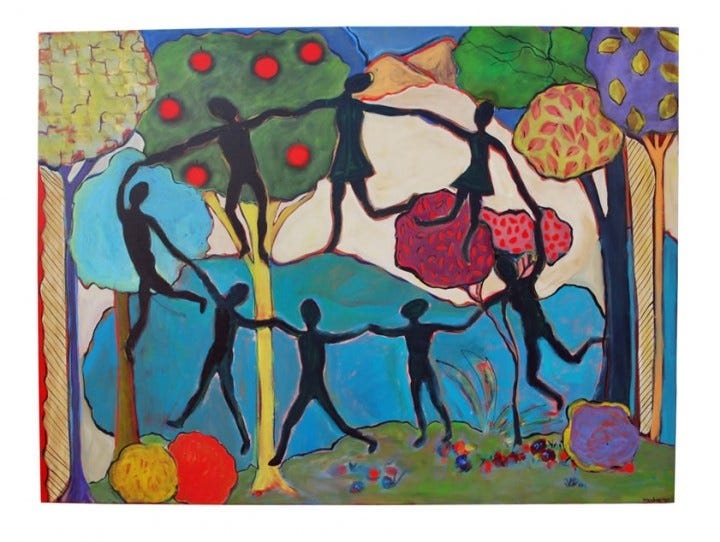
Congratulations Beloved – There are a couple of caveats though: When you Give Peace & Dance (remember when?) Your old self is the fuel you will use to burn Blessings & peace –
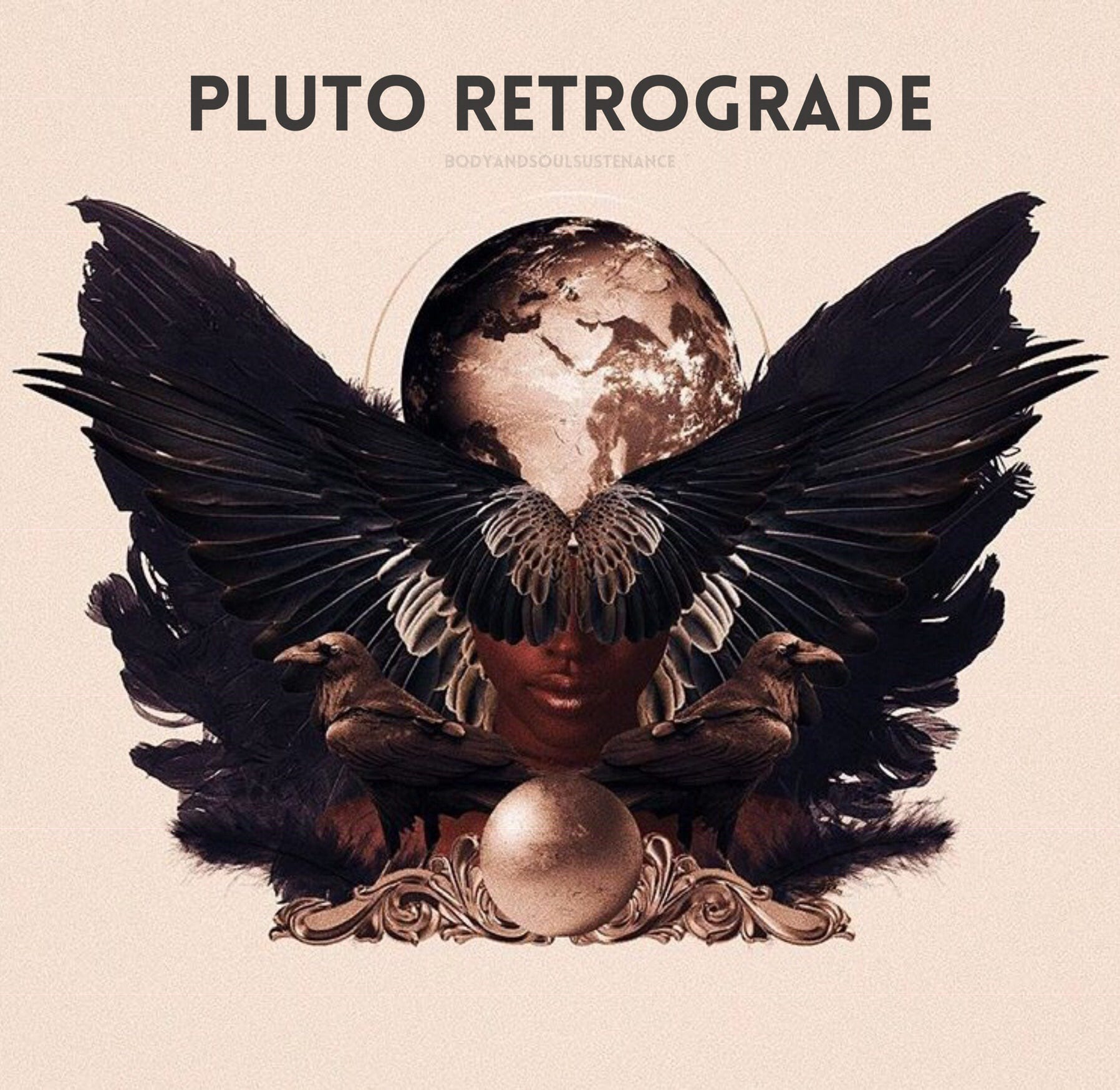
2 May 2024 - “Speaking with the Stars”: Pluto goes retrograde - This dwarf planet, named after the Roman god of the underworld, was discovered in 1930 with the rise of dictatorships & experiments with nuclear power. Pluto, is the planet of transformation, power, death, & rebirth, it will begin its retrograde cycle in Aquarius, before backtracking into Capricorn. Once Pluto retrograde ends it will begin to move forward again & re-enter Aquarius where it will remain until 2043. Pluto in Aquarius is associated with innovation & progress – we are called to confront our own futures & the ways we either hinder or facilitate this vision. Pluto’s backward movement in Capricorn, on the other hand, will prompt us to collectively examine the societal systems in place – like healthcare, government, banking, etc…Could this result in major political shifts or societal revolutions? During this retrograde phase, we’ll find ourselves on the cusp of substantial change, forced to decide to let go of what no longer serves.
ON THIS DAY IN HISTORY (From the Original Calendar of the Soul by Rudolf Steiner, Anthrowiki, rsarchive)
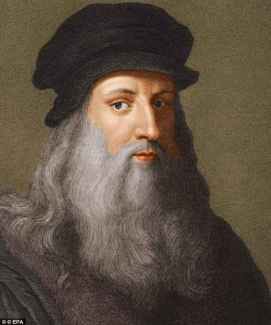
1519 – Death Day of Leonardo da Vinci, Italian painter, sculptor, & architect. “…We know how Leonardo worked at the “Last Supper”. He often went and sat on the scaffolding and brooded for hours in front of the wall, then he would take a brush and make a few strokes and go away again. Sometimes he only went and stared at the picture and went away again. When he was painting the Christ Figure, his hand trembled. Indeed, if we put together all that we can find concerning this subject we must say that neither outwardly nor inwardly was Leonardo happy when painting this world-renowned picture. Now there were people at that time in Milan who were displeased with the slow progress of the picture, for instance a Prior of the monastery, who could not see why an artist could not paint such a picture quickly, and complained to the Duke. He too thought the affair had lasted too long. Leonardo answered: “The picture is to represent Jesus Christ and Judas, the two greatest contrasts; one cannot paint them in one year; there are no models for them in the world, neither for Judas nor for Christ”. After he had been working at the picture for years, he said he did not know whether he could finish it after all! Then he said that if finally he found no model for Judas he could always use the Prior himself! It was thus extraordinarily difficult to bring the picture to a conclusion but within himself Leonardo did not feel happy. For this picture showed the contrast between what lived in his soul and what he was able to represent on the canvas. Here it is necessary to bring forward a hypothesis of Spiritual Science, which may be reached by anyone who studies what can by degrees be learned about this picture.” ~Rudolf Steiner, Leonardo da Vinci, His Spiritual and Intellectual Greatness, At the Turning Point of the New Age
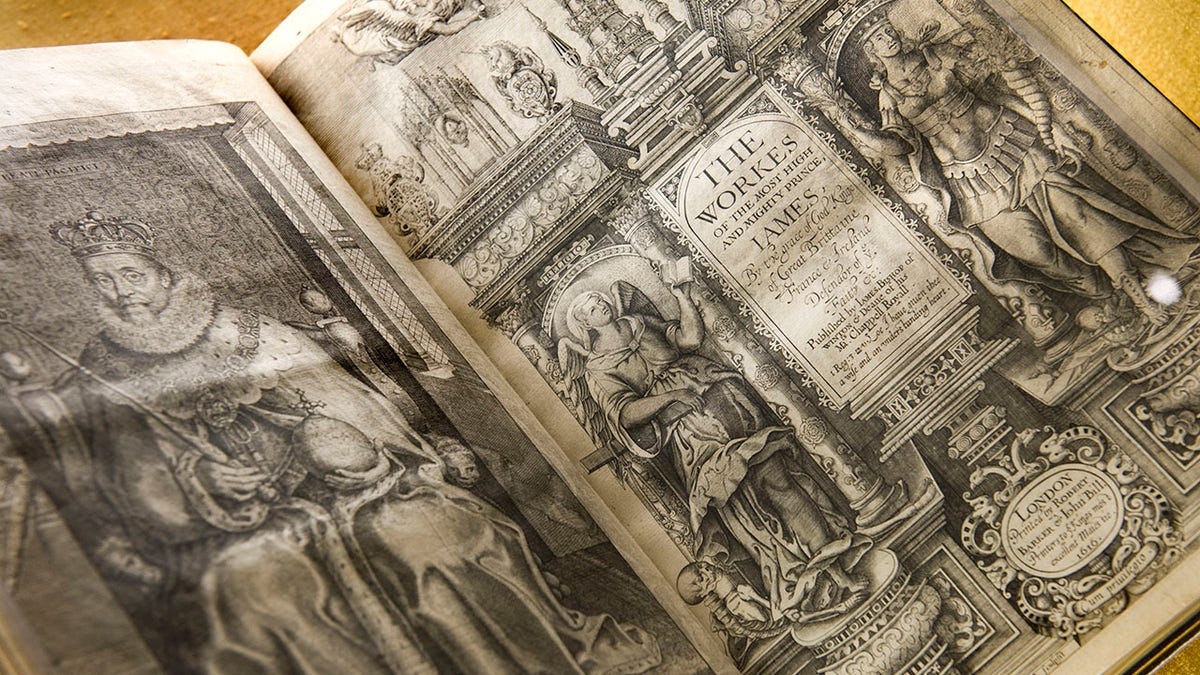
1611 – The King James Version of the Bible is published for the first time in London, England, by printer Robert Barker
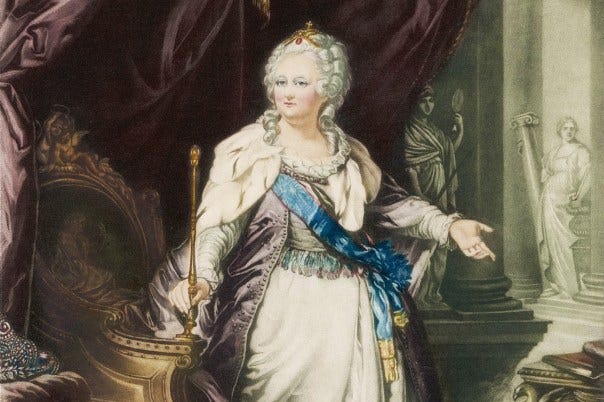
1729 – Birthday of Catherine the Great of Russia, the longest-ruling female leader of Russia. The Catherinian Era, is often considered the Golden Age of the Russian Empire & the Russian nobility. As a patron of the arts she presided over the age of the Russian Enlightenment, a period when the Smolny Institute, the first state-financed higher education institution for women in Europe, was established.
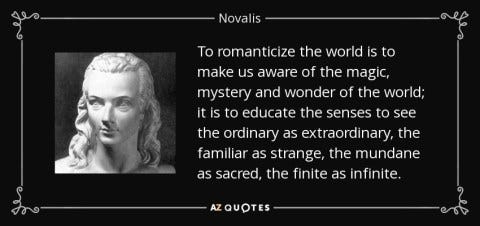
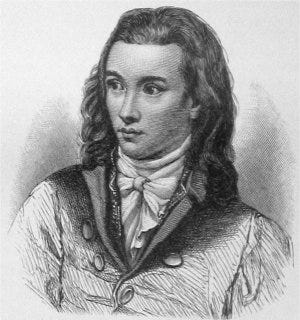
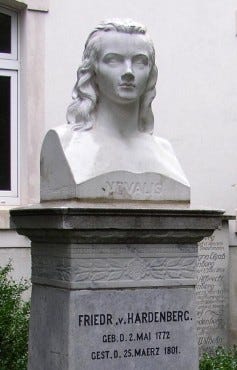
1772 – Birthday of Novalis, the pseudonym & pen name of Georg Philipp Friedrich Freiherr von Hardenberg, poet, author, mystic, & philosopher of Early German Romanticism. His study of mineralogy & management of salt mines in Saxony, was often ignored by his contemporary readers Novalis concerned himself with the scientific doctrine of Johann Gottlieb Fichte, which greatly influenced his world view, transforming Fichte’s Nicht-Ich (German “not I”) to a Du (“you”), an equal subject to the Ich (“I”). This was the starting point for Novalis’ Liebesreligion (“religion of love”) dedicated to his beloved Sophie who died of tuberculosis.
“Everything beloved is the centre point of a paradise.” – Novalis Novalis took the name from “de Novali” which was an old family name. The future Baron von Hardenberg was born into a noble German family in lower Saxony. He was sent to a religious school as a boy, but he was stifled by the strict atmosphere and he never adjusted to its severe discipline. He later lived with his uncle who introduced him to the French literature and rational philosophy. He then went to Weissenfels, where his father moved, and entered the Eisleben gymnasium. In 1790-91 he studied law at the University of Jena, where he met Friedrich von Schiller and Friedrich Schlegel. Novalis completed his studies at Wittenberg in 1793. In the 1790s, the ideas of the French Revolution spread among idealistic intellectual circles throughout Europe, greatly inspiring the young Novalis. He was also deeply moved by reading the mystical philosophical writings of Goethe. Goethe’s book “Wilhelm Meister’s Apprenticeship”, which he read in 1795, influenced him deeply; he considered it the Bible for the “New Age”. In 1795-96 he studied the works of Johann Gottlieb Fichte. At the age of 21 he moved to Tennstädt and took up job in civil service.
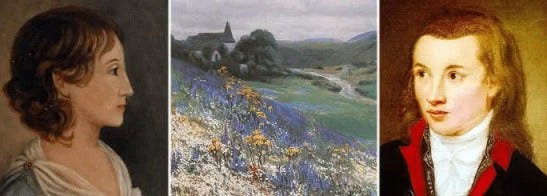
When Novalis was a young man, he fell in love with a teenage girl named, appropriately enough, Sophie (Sophia is a personification of the goddess of wisdom, the feminine embodiment of the divine in Western gnostic traditions). His experience of love for the young woman was so deep that it became a transformative, “mystical” experience for the young and impressionable Novalis, whose reading had made him receptive to the concept of ideal love. Sadly, Sophie von Kühn died two years later of tuberculosis. In 1798 Novalis published a series of philosophical fragments, “Fragmenten”. The loss of his beloved caused an infinitude of pain and sorrow for the hapless young lover, but it also served as strong inspiration and source of creative energy. His “Hymnen an die Nacht” (Hymns to the Night – 1800) was the resultant work. This is a collection of prose, poetry and aphorisms in praise of the sacred encounters with nature, night, sleep, and the magnetic connection between the masculine and the feminine.
Novalis died at the age of 29 of tuberculosis, the same disease that claimed Sophie. He is considered one of the early German Romantics, and he is sometimes referred to as “the prophet of the Romantics”. ~from nicholasjv.com
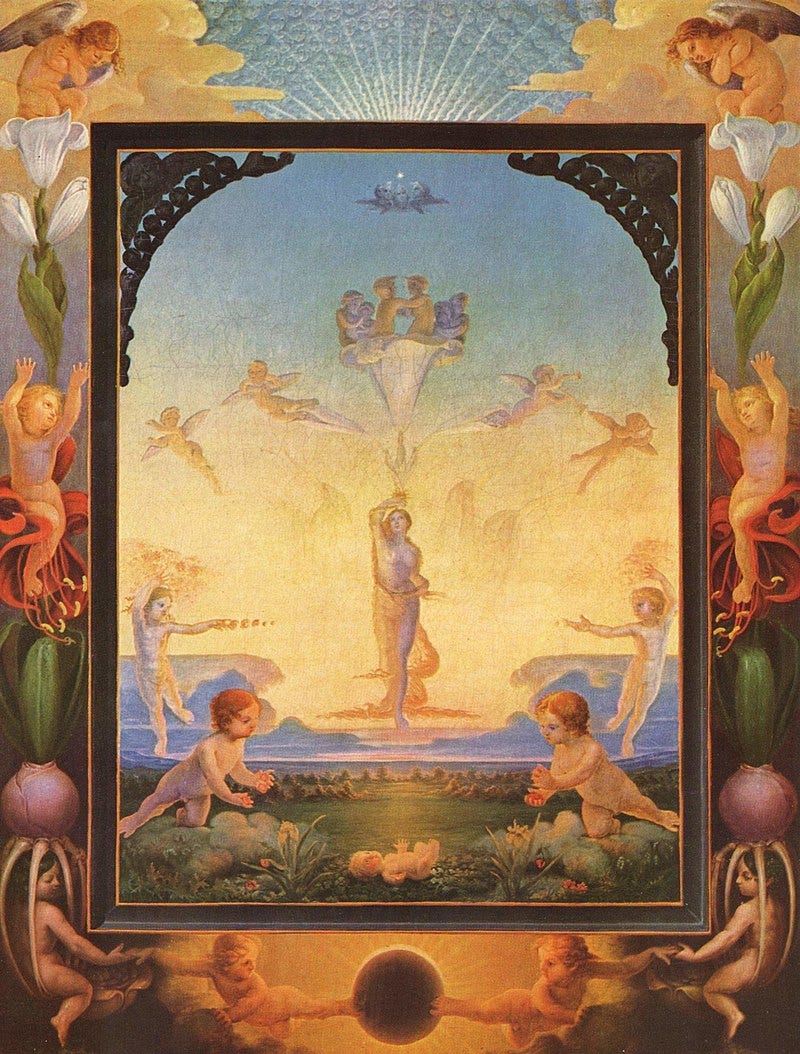
“…When we consider the life of Novalis, what an echo we find there of the Raphael life for which Hermann Grimm had so fine an understanding! His beloved dies in her youth. He is himself still young. What is he going to do with his life now that she has died? He tells us himself. He says that his life on Earth will be henceforth to “die after her”, to follow her on the way of death. He wants to pass over already now into the super-sensible, to lead again the Raphael life, not touching the Earth, but living out in poetry his magic idealism. He would fain not let himself be touched by Earth life. When we read the “Fragments” of Novalis, and give ourselves up to the life that flows so abundantly in them, we can discover the secret of the deep impression they make on us. Whatever we have before us in immediate sense-reality, whatever the eye can see and recognise as beautiful — all this, through the magic idealism that lives in the soul of Novalis, appears in his poetry with a well-nigh heavenly splendour. The meanest and simplest material thing — with the magic idealism of his poetry he can make it live again in all its spiritual light and glory. And so we see in Novalis a radiant and splendid forerunner of that Michael stream which is now to lead you all, my dear friends, while you live; and then, after you have gone through the gate of death, you will find in the spiritual super-sensible worlds all those others — among them also the being of whom I have been speaking to you today — all those with whom you are to prepare the work that shall be accomplished at the end of the century, and that shall lead mankind past the great crisis in which it is involved.” ~Rudolf Steiner, The Individuality of Elias, John, Raphael, Novalis – The Last Address – Dornach, Michaelmas Eve, 1924
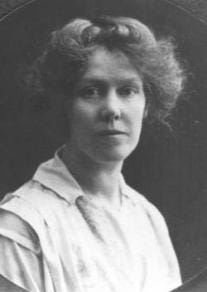
100 Years Ago TODAY - 2 May 1924 – Deathday of Edith Maryon an English sculptor who worked closly with Rudolf Steiner on the carving of the First Goetheanum & on the Scultural Group called The ‘Representative of Humanity’. Edith Maryon studied sculpture at the Royal College of Art -London, & exhibited her work at the Royal Academy. When she met Rudolf Steiner & Anthroposophy, she discovered her raison d’être, moving to Dornach in January 1914 - an auspicious timing since very soon after WW1 would begin, engulfing the world in catastrophe. Maryon was a trailblazer - Rudolf Steiner said of her: “There was hardly any other artist coming to work in Dornach before her, capable in the way Edith Maryon was, of sacrificing - that is, largely giving up her own deeply rooted style, born out of the aesthetics of Greece, in favour of a new Mystery art”. The next decade was a period of productive creativity for the English sculptor, a period in which she found her life’s purpose. “Edith Maryon…was helping him [Steiner] with the Goetheanum building and above all with the great wooden sculpture the ‘Representative of Humanity’. Miss Maryon throughout those years was one of his closest collaborators. The studio in which the work was going on became his study for a great part of the day. Here he received his visitors, and she was acting very largely as his secretary…We were received in the most friendly way by the Dornach members and above all by Miss Maryon herself. She gave us mallet and chisel and let us help with parts of the sculpture where there was much superfluous wood and our unskilled hands could do no harm”. ~George Kaufmann Adams, who went on to translate many of Steiner’s lectures into English which Miss Mayron had attempted to take on herself. “Rudolf Steiner stood, day after day, beside his colleague in the high ceilinged sculpture studio. During this time they not only worked with their hands, but also conversed intensively on every imaginable subject - from art, through politics to things of the deepest concern. Over & above this his studio had become for Rudolf Steiner a refuge of inner peace in which - well protected from visitors by Edith Maryon - he could both do a lot of esoteric work & also relax”. “Edith Maryon resisted any haste”. For this reason, the work was not destroyed in the fire of the first Goetheanum on New Year’s Eve 1922/23, because it was still in the studio. When there was a housing shortage in Switzerland, Edith Maryon – together with Paul Johann Bay – designed three houses for employees on Dornacher Hügel between 1920-22. At that time called “English houses”, today they are the ‘eurythmy houses’. Edith Maryon was in constant personal or letter contact with her teacher, Dr. Steiner. In a brotherly way, he confided a great deal to her & dedicated some of his texts to her. While working in the sculptor’s studio around 1916, she once saved him from a serious, perhaps fatal, fall. In 1923 (after the burning of the first Goetheanum) Edith Maryon fell seriously ill. At the end of the year she was appointed head of the section for fine arts at the Goetheanum (without being able to hold the office) Edith Maryon died on 2 May 1924 from tuberculosis, & many say from a broken heart - a depletion of her etheric forces which were tied up in the burning of the Goetheanum. A portion of Rudolf Steiner's verse for Edith Maryon's crossing -
Sangraal: A Pentecost Pilgrimagewith Mysteria Mystica Americana (MMA) Saturday 18 May 2024 Noon – 1:30 PM Central TimeCreating Sacred Space on Zoom ID: 705 017 4041 - Passcode: MMA https://us06web.zoom.us/j/7050174041?pwd=j1AkESGygaKVFaD0T7r2lfV533BWfm.1&omn=87316485500 w/ Richard Cloud, Hazel Archer, Lisa Loving Dalton, Zakaria Manella. And friends: Alexander Torrenga, Jeffery Levy.
Greetings Friend, you currently a free subscriber to Cognitive Ritual. Thank you for receiving my workings freely offered. For the full experience, upgrade your subscription. ALL donations go to support Zinniker Farm - The oldest Biodynamic Farm in America! Together we can spiritualize the Universe. XOX ~hag
|
Thursday, 2 May 2024
Say I Do









Subscribe to:
Post Comments (Atom)
One Person. Earnest Prayer. God’s Will at Work Fresh Manna by Pastor Tim Burt
Fresh Manna with Pastor Tim Burt A Note from Pastor Tim Tim here. I'm so glad you...

-
Fresh Manna with Pastor Tim Burt A Note from Pastor Tim Tim here. I'm so glad you...


No comments:
Post a Comment